PSYCHOSYNTHESIS INSTITUTE
Pi

From the center
unfolding into life.
Tools for Personal & Social Transformation
Psychosynthesis Musings
Resources and reflections about the theory, practice, and living spirit of psychosynthesis.
This collection is gradually unfolding. We are adding new articles, reflections, guides, and resources as the Psychosynthesis Institute continues to grow. We invite you to return as the library expands.

Psychosynthesis: At the Still Point of Consciousness
We are more than our stories, roles, wounds, and symptoms. This reflection explores the psychosynthesis understanding of the Self and why reconnecting with our inner center matters, not only for our own lives, but for the world we are creating together.

Psychosynthesis: Beyond Healing & Where Psychology Echos Myth
Healing matters. And yet healing is not the whole journey. It brings us to a threshold where something larger can begin: the unfolding of who we are, what we value, and how we are called to participate in life. This is where the "psyche" in psychology echoes myth.
Who Is Aware? The Power of Pause & The Freedom of the Observer
We all have access to a space we can enter before choosing, before planning, before acting.
This is the pause before decision, it is a breath before movement. This is the space of the observer, the space of awareness. It is from here that purposeful action can arise. In the pause, we reclaim the possibility of choice. A choice rooted in purpose rather than reaction.
We may find ourselves moving through our days on automatic pilot, driven by old internal patterns or external pressures. When we take the moments to observe what is happening in our body, mind and heart, our experience and our ability to choose mindfully, expands; we reconnect more fully with our inner resources.
The Lost Connection: When Psychology Forgot Psyche...and Transpersonal Psychology Reclaimed Her
Psyche, is the Greek goddess with butterfly wings.
Along her journey of tests, trials, courage and magical guides, Psyche transforms from an innocent and naïve young woman into an immortal being, symbolizing resilience and giving form to the meaning of her name: spirit, soul...the very breath of life.
Psyche’s story describes how a human life becomes whole. Her immortality is realized through acts of will, informed by the qualities of patience, and love. She learns along her journey to trust an inner call of the self and to let her soul mature through embracing and prevailing within her challenging circumstances.
Psyche reminds us that wholeness is achieved, not by avoidance, but by allowing experience to shape the form of the very highest capacity of our being.
Psyche is the first root of “psychology” combined with “logos”, means “study of the soul”. The earliest beginnings of psychology were concerned with the essence of our inner life, with an implicit reverence for the divine; a larger field of meaning making beyond the material, what we might now call the transpersonal.
Feeling, desire, imagination, intuitive knowing and the natural impulse to unfold and grow whole were the “logos”, the universal organizing principle of what it meant to be human. In one of the first written references to psychology, a 17th century dictionary described: “Anatomy which treats the Body, and Psychology, which treats of the Soul.”
Psychology assumed that spirit, soul, questions of purpose, expression of values in living and what it meant to be mortal, were to be explored and understood. To study the psyche was to enter into the interior life in all its richness. These spiritual and philosophical beginnings, were at the heart of psychological inquiry; exploring interior life and understanding how this inner world found expression in symptoms, patterns, and behavior.
And, then in the 19th century, the connection between psyche as soul and spirit began to loosen and separate. As psychology sought legitimacy as a science the focus began to narrow to a reductionist orientation of “logos”. Increasingly psychology became primarily concerned with what could be observed, measured, and explained. The mystical, intuitive, luminous aspects of interior life was reframed in mechanical and biological terms. Questions of values, meaning purpose, and transcendence were declared largely “unscientific.”
The field narrowed along with a more spacious and comprehensive understanding of the human psyche. As ‘Psyche’ the soul and spirt became increasingly “unscientific.” Love and will, imagination and purpose were relegated to formal religion or personal belief systems. Psychology became increasingly concerned with describing, regulating and fixing symptoms and behavior.
While this resulted in important insights, techniques and tools to reduce suffering and enhance the lives of many, the drive towards scientific respectability became a lost connection in the original marriage of psychology and spirituality with logic and order. The reductionist, scientific approach may have contributed to a greater capacity to navigate on the personal plane of existence (house, car, job) but neglected, minimized and even ignored the inner call to something beyond the material. The transpersonal, values driven, meaning-making plane of existence, the expression of spirit and soul through creativity, beauty, love, selflessness, and the evocative qualities that inform our individual and collective paths of self-realization, were set aside.
Freud’s conceptions helped psychology gain more scientific credibility in the late 19th and early 20th centuries by explaining inner life in reductionist terms of drives, conflict, and unconscious mechanisms. While he acknowledged the importance of inner experience, he largely reduced spirituality, and creativity to instinct and pathology, placing them in what Roberto Assagioli called the ‘basement’ of the building focused on the lower unconscious and past influences. Freud advanced psychology as a science, and at the same time contributed to narrowing the view of the psyche to the past rather than the potential of a larger, future forward unfolding of consciousness and the psyche.
Carl Jung, expanded the exploration of the inner world, through the depths of the individual and collective unconscious. Dreams, archetypes and symbolism were brought back into psychological inquiry. The Humanistic psychologists, Rogers, Maslow, May and Bühler, among many, shifted the focus of psychology back to the inner, innate drive of self-actualization. William James bridged between the humanists with Transpersonal Psychology, and contributed to reconnecting psychology with its roots, integrating spiritual experience, higher development, and collective responsibility
This is where psychosynthesis quietly enters the story. Psychosynthesis restored the idea that the psyche has depth and height, instinct and aspiration, wound and will. Roberto Assagioli, described the psyche as being like a house with a basement, a main floor and an elevator to a rooftop garden where we can view the stars.
Like Psyche’s journey of tests and trials towards wholeness and spiritual realization, Roberto Assagioli’s conceptions of psychosynthesis in the late 19th to mid 20th century, understands growth as relational and purposeful. And, like Psyche’s story, psychosynthesis invites us to sort, gather and retrieve what has been scattered, and incorporate these into an unfolding toward wholeness.
In psychosynthesis, we are offered tools to enter the lower unconscious without losing our way, and to return to our lives with greater skill, understanding, and choice. And, we are offered the invitation to honor and integrate the gifts of soul, spirit, and transpersonal experience, each in our own way. Assagioli described this as “taking us to the threshold of the mystery” and, from there we through our own individual acts of will, step into our own paths and spiritual realizations.
Roberto Assagioli did not attempt to resurrect the myth of Psyche as metaphor alone. He recognized that myths endure because they describe psychological truths and that these can be found in every aspect of the natural world, all participating in a single developmental movement toward synthesis.
Our suffering is neither denied nor romanticized. Healing is not the end destination. In psychosynthesis, the psyche is not only healed it is oriented towards the expression and manifestation of meaning and toward responsibility beyond the individual.
Assagioli wrote of personal, psychosynthesis as only the first step in social transformation because he understood that individual coherence quietly reshapes the world.
Transpersonal psychology and psychosynthesis, with a skew towards the higher unconscious has its own shadow of spiritual bypass. Spirituality and positivity can be ways to avoid grief, trauma, and complexity.
Our challenge, and our opportunity, is to embrace how to hold the ‘both and’ of suffering and aspiration, healing and meaning, science and soul within a more mature psychological whole that holds and expands the vast possibilities of what it means to be spirit embodied.
The current emphasis on trauma and somatics has rightly returned psychology to the body and to lived experience. Assagioli was, both a psychologist and a physician, and would write of the importance of the body in grounding the psychological experience of synthesis.
However, if the focus on sensation is not held within a larger developmental and meaning-making context in somatic work, another split can occur, another connection can be lost. Somatic regulation without deeper, purpose driven orientation, sensation without connection to the self, healing without a sense of becoming, risks the loss, yet again, to the connection with Psyche. Remembering that our dynamic living process seeks not only safety, but coherence, direction, and meaning.
Perhaps it psychology has been on its own evolution to return with a fresh ‘turn of the wheel’, ready to hold both science and soul, rigor and meaning, healing and initiation in the same conversation.
Let us consider that, perhaps, the connection was never truly, fully lost. Psyche’s story still speaks to a deeper yearning, a intuitive knowing.
We are not only here to recover from what has wounded us. We are here to become capable of our fullest potential of being, to express our soul’s calling, and as Assagioli conceived, create a path towards “right human relations” and universal understanding.
~ Originally published on Synthesis Muse, Susan Jewkes Allen’s Substack publication exploring psychosynthesis, inner work, and the call of the self. Republished here with permission as part of Psychosynthesis Musings.
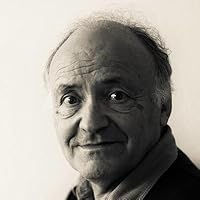
Many studies in neuroscience show us psychosynthesis in action (without calling it that) in all its important aspects. Studying neuroscience in this context is like learning psychosynthesis again from a different, more concrete perspective...we may ask: Is it of any use to know which brain areas are activated in correspondence to a inner event? I believe it is. An inner event happens: an emotion, an ability to distance the self from subjective experience, the perception of beauty, an act of will, a memory, a mental image. Meanwhile we have a precise, outer graphic representation of this same event. It is as though events in our inner world were receiving a new ontological status: a confirmation that they are not merely vague, indefinable processes, but concrete happenings and shapes on a map. The soul has at last started to incarnate.
Interest in Learning More? Want to Receive a Program Guide?
Contact us to receive your program guide and learn more about our upcoming training and more!