PSYCHOSYNTHESIS INSTITUTE
Pi
From the center
unfolding into life.
Tools for Personal & Social Transformation
Psychosynthesis Musings
Reflections on the theory, practice, and living spirit of psychosynthesis.

Psychosynthesis: At the Still Point of Consciousness
We are more than our stories, roles, wounds, and symptoms. This reflection explores the psychosynthesis understanding of the Self and why reconnecting with our inner center matters, not only for our own lives, but for the world we are creating together.
Listen
or read, below.
We each have a still point, a center of pure consciousness that is more than our stories, roles, wounds, or symptoms.
In psychosynthesis, this is the Self, the “I”, a space of clear awareness from where we can observe, choose, and relate to our experience without being reduced by it.
To be told, “You have a Self” is both a simple declaration and a radical one. It names a center of consciousness and will that cannot be reduced to story, diagnosis, or role. And this is not only a personal truth.
We, have a Self.
We share a human capacity for self and other awareness, an “I and Thou”. We have the capacity to choose, individually and together, about the ways we carry responsibility for one another and toward life beyond our own time. How we connect and act, from, or away from, our inner center shapes our collective life.
We are living in a moment when identity is increasingly organized around trauma language, diagnosis, and personal narrative. This narrows us, as it is amplified by powerful social and cultural forces. Appearance, gender identity, skin color, ethnicity, financial status, professional roles, the brands we wear and carry, and even the number of “likes” we accumulate quietly seep into our individual and collective consciousness, shaping who and how we are seen, valued, or erased.
These forces do more than describe us; they condition us. Our wounds are amplified, our attention is fragmented, we become increasingly challenged in hearing, let alone responding to our creative imagination to manifest the fullest potential of possibility for our lives.
This ‘noise’, these forces that combine to separate us from our “self” is more than the loss of a sense of personal empowerment. These messages and actions reduce our capacity to live from a deeper center of awareness and will. Connection to self, the psychosynthetic process of Dis-Identification, facilitates our ability to silence the noise in order to hear own voice. This is a fundamental step in claiming our natural impulse to grow whole as individuals and as a humanity.
The idea that there is something in us that is not defined by internal and external story can feel almost subversive. Contemporary psychology is primarily focused with naming and treating wounds and trauma. In many ways, this has brought real compassion and visibility to suffering that was once ignored or minimized.
These understandings and healing approaches matter. They can help us gain insight about what has happened to us, individually and collectively, even as they risk becoming the whole narrative. When pathology and wounding becomes the primary lens through which identity is understood, something essential, our very spirit, may quietly contract.
Psychosynthesis offers a different orientation. It does not deny our personal, social or collective trauma; it does not suggest we bypass the very real injuries carried in bodies, families, and cultures.
Instead, it asks deeper questions: What within us can hold this without being consumed by it? What allows us to meet pain without becoming completely identified with it?
“I have, you have, we each have, a self” names that possibility.
This points us to a center of consciousness and will that is not erased by suffering, even when suffering has shaped us deeply. As Roberto Assagioli wrote, it is “independent of outer circumstances.” Our ‘self’ is the place from where our embodied soul and spirit can be expressed through purpose, choice, and good, strong and skillful will. This matters not only for our individual life creation, it matters for the social transformation that offers the possibility of a humanity where love, peace and joy can be fully expressed and lived.
When we as individuals are organized primarily around unintegrated wounds, the collective will tend to reproduce those fractures, in polarization, reactivity, and cycles of harm that repeat rather than transform. We must heal, but this is only a step to becoming fully whole. We also need internal coherence and integration, to build our capacity to hold and weave together our many threads of internal and external experience.
Roberto Assagioli designed psychosynthesis with the understanding that personal integration and social transformation are not separate projects. Each are different expressions of the same movement toward synthesis.
As we learn to identify and disidentify from our many inner experiences and ‘parts’, and then connect to our inner center of ‘Self’, something shifts outward as well. Listening to our inner call and the connection with others, deepens. We are able to choose from a place of purpose, and our actions becomes less reactive and more intentional.
In these fractured and tumultuous times, the notion that you, I, we, have a ‘self’, is not an abstract idea, it is a practical one. Our collective wounds, racism, displacement, violence, ecological loss, are not only lived “out there,” but also within our individual and collective nervous systems, identities, and inherited patterns of response.
We need more than awareness or outrage or hiding away just to survive each day.
These times call us to the work of staying centered in the presence of turmoil, our own, that of others, as well as the wider currents moving through the world.
It requires us to act from a will aligned with the very best of ourselves, with courage in the face of fear and the capacity to experience a joy that endures beyond the changing conditions of our lives.
“I have a Self” is an invitation into that experience. It is a simple sentence.
And it can begin to transform everything.
~ Originally published on Synthesis Muse, Susan Jewkes Allen’s Substack publication exploring psychosynthesis, inner work, and the call of the self. Republished here with permission as part of Psychosynthesis Musing
In times of silence… we can sense a “still, small voice” within that urges us in a certain direction,
a voice which we recognize as coming from the most central part of our being, from our true self.
We must learn to recognize this voice of the Will – as this is the way that enables us to
“Become that which thou art.”
This wise voice will work from within, following the prompt of inner knowledge in choosing a course of outward action.

Psychosynthesis: Beyond Healing
Healing matters.
And yet healing is not the whole journey. It brings us to a threshold where something larger can begin: the unfolding of who we are, what we value, and how we are called to participate in life.
Our healing helps us regain our ground, reconnect with ourselves, and become more available to life. Because our psyche is not a collection of separate parts, but a living field of relationship, one movement of inner healing can begin to shift our larger being.
In psychosynthesis, we understand the inner realm of the psyche as a living and dynamic whole: touch any part of it and the entire field responds. Assagioli’s egg diagram, the model of the psyche, is not a static map. It offers the starting place for a visual language of movement. Much like a spiral dance, when we attend to one dimension of consciousness, we circle round to expand and activate the whole.
Healing work in the lower unconscious, does not remain “below”. The wounds, shadows and early patterns, that may keep us stuck in habitual ways of being are brought into the light of awareness. Through the practice of identifying, disidentifying, self-identifying, what was once fragmented or hidden can begin to reorganize. It is then that we can then begin to integrate, in healthy ways into fuller experience.
The middle unconscious is reshaped, expanding how we think, feel, and choose to act in service of our life creation. This is where healing become more than repair, it is transformative.
Our relationship with the higher unconscious, our capacity to hear and respond to the ‘call of the self,’ opens us to the realm of meaning, intuition, creativity, and transpersonal qualities. This is the expansive, work of psychosynthesis.
In psychosynthesis we understand that while we may carry unintegrated material in our lower unconscious, we also have rich, unrealized potential in the higher unconscious. Latent evocative qualities of courage, compassion, creativity and love may not have found full expression. These qualities can seem, at times, to be inaccessible because so much of our energy and attention is drawn unconsciously to our pain, fears, and trauma.
As we develop our capacity to observe, rather than be identified with our suffering, we can bring what needs to be healed into the light. When lower unconscious material is met with care and skill, we are more fully able to explore the darkness with awareness and care. In this way, the psyche does not contract, it expands. The work in the lower unconscious opens up a fuller connection to higher unconscious . The fractures open to the light, offering insight, and orientation, giving voice to purpose and meaning. What once felt aspirational or distant becomes quietly available. This movement of consciousness is not linear, it is reciprocal.
This is where psychology echoes myth.
The myth of Psyche, the soul and spirit of psychology, is a story of a young woman’s descent into the underworld. Her journey is a metaphor for stepping into the lower unconscious as an initiation into wholeness. Psyche’s tests, her “impossible tasks”, do not diminish her. With each trial her inner life expands . She develops deeper connection to love, meaning, and her place in the wider world. And, as in all myth, descent is a portal to the heights of the transpersonal. When darkness is met with care and consciousness, unexpected allies and ‘magical guides’ appear. What once felt fragmented becomes integrated and expanded. There becomes a greater opening, lighting the way to self-realization; and in the case of Psyche, immortality.
As our healing in one area reorganizes the whole, our contact with transpersonal values and qualities strengthen our capacity to not only face our trials, they propel us toward meaning-making. The middle unconscious becomes more integrated, less reactive, and more coherent. We develop a growing capacity to listen and observe. This opens us to the guidance of the Self to express what truly matters through the act of our will.
And, we must hold in remembering and intention, that the aim of psychosynthesis is not simply to attend to the personal, individual psyche. Our work on the personal level facilitates our engagement and participation in relationships, in creative and social life, in the forming and reforming of culture; the ways we make a difference in the larger world.
Our inner healing towards greater coherence can become the foundation for purposeful action to emerge. In these turbulent times, our inner experiences have outer consequences. When our psyches are fractured we are more likely to feel powerless in fragmented systems. (There is method in the current ‘madness’)
As Assagioli understood, personal development and social transformation are aspects of the same unfolding. From our living center of Self, our psyche becomes capable not only of recovery, but of contribution. We become empowered to take action in manifesting what truly matters, in a world that urgently needs both depth and vision.
This is the fuller arc of healing that psychosynthesis offers.
In the journey through the depths and heights of being, we become engaged in more than an escape from suffering. We become a part of a widening of consciousness towards visioning and embodying a better world for all.
~ Originally published on Synthesis Muse, Susan Jewkes Allen’s Substack publication exploring psychosynthesis, inner work, and the call of the self. Republished here with permission as part of Psychosynthesis Musings.
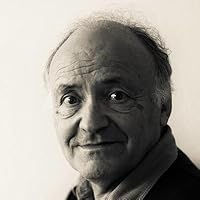
In short, the positivity with which psychosynthesis approached the human condition; the tools it provided for psychospiritual growth; the reframing of pathology into steps forward along the path; the vast strands that Assagioli wove with both eastern mysticism and western psychology to create a comprehensive model of the richness of Being Human profoundly contributed to who I am today.
Contained within this model there is no dogma, no doctrine, and no ‘isms’ to be adopted. There is not a Truth to be adopted, but a generous exploration of finding one’s own trust and belonging in the universe. His ethos and values stressed that our growth and development needs to be empirical – that is, it needs to fit and be congruent with our experience. If not, he said, ‘chuck it out’.
Who Is Aware? The Power of Pause & The Freedom of the Observer
We all have access to a space we can enter before choosing, before planning, before acting.
This is the pause before decision, it is a breath before movement. This is the space of the observer, the space of awareness. It is from here that purposeful action can arise. In the pause, we reclaim the possibility of choice. A choice rooted in purpose rather than reaction.
We may move find ourselves moving through our days on automatic pilot, driven by old internal patterns or external pressures. When we take the moments to observe what is happening in our body, mind and heart, our experience and our ability to choose mindfully, expands; we reconnect more fully with our inner resources.
Take a moment to breathe.
Notice the rhythm of your breath and take a gentle, full inhale; experience the release as you exhale.
Invite your awareness to move through your body, from your feet…up through your legs…your spine…your shoulders…your arms…your neck and head.
Simply notice what is present.
Now bring attention to your heart space.
What emotional tone is here? Calm. Worry. Agitation. Joy. Peace. Something unnamed.
And now pause and consider: Who is aware?
This experience of centered awareness is the space of the “I,” the observing self.
The observer is not detached nor distant, from our experience, it is present, steady, and spacious. In psychosynthesis, identifying and being a witness to our thoughts, emotions, and sensations, is our threshold to the fullness of our consciousness, clear and aware.
What often brings people into coaching or inner work is not a lack of insight or motivation, but an over-identification with specific aspects of immediate inner experience. There becomes a dominating belief that whatever one is feeling or thinking is the whole of one’s identity or situation. It is in these moments that we may not experience a space between what is happening and understanding who we are.
A passing emotion becomes an identity. A temporary state becomes a defining truth. A protective pattern becomes “just the way I am.” Over-identification does not mean the feeling is wrong or illegitimate. It means perspective has narrowed.
We may forget that thoughts, emotions, and impulses move through us sometimes like clouds I’m the sky, other times like a hurricane, and yet, they are not the entirety of us. When we are identified with the inner contents of our experience our choices narrow. We react rather than respond. We act from whatever part of us is loudest, our fears, our sadness, our anger, without taking the pause to access to the larger field of who we are.
Psychosynthesis offers a simple but powerful shift: Instead of being the anger, we can notice, “Anger is present.” Or “I am experiencing anger right now”…instead of being sadness, we can say, “Sadness is within me.”
This small movement of attention creates space, and in this space, freedom to choose how we will respond expands.
This is much like standing very close to an impressionist painting. When are close to the canvas, we will see isolated brushstrokes, dots and fragments. These will seem disconnected and even a bit chaotic. As we step back, a larger, more beautiful landscape comes into our view.
Our thoughts, emotions, and impulses are like these brushstrokes. While they are real and important, they are actually just a part of something much larger, something that offers meaning, purpose and values in the possibility of our lives.
When we ‘step back’ into fuller awareness, we can acknowledge each brushstroke of our experience without limiting the possibilities of who we are and who are becoming.
Without the observer, we respond from impulse, disconnected from centered intention. We choose from fear, unaware that fear is driving. We react from emotion, without access to deeper knowing. Without the observer invited into the field of awareness, automatic patterns and semi-autonomous subpersonalities quietly organize our behavior.
When we pause, when we observe, identify, and gently disidentify from the immediate content of experience, something shifts.
Space opens. And from that space, a more fully conscious and purposeful choice becomes possible.
This is the first quiet movement of will…not will as force, but will as presence: good, strong, and skillful.
~ Originally published on Synthesis Muse, Susan Jewkes Allen’s Substack publication exploring psychosynthesis, inner work, and the call of the self. Republished here with permission as part of Psychosynthesis Musings.
With the scientific validation of meditation, imagery and spirituality as approaches to help patients, the time is right for a new role in healthcare:
“a specialist who understands…these resources as “transpersonal,” we recommend that a professional with such knowledge—a psychosynthesis-trained health professional—should be available in every unit of a hospital, in every business wellness service, in every clinic, school, house of worship, and in the private practices of various specialties. There are many health professionals who are drawn to meditation, spirituality, holistic and integrative medicine, visualization, energy practices, religious and mystical study who could train in psychosynthesis and fill this role. They would be serving a double purpose—to help patients and perhaps to help their fellow professionals.
The Lost Connection: When Psychology Forgot Psyche…and Transpersonal Psychology Reclaimed Her
Psyche, is the Greek goddess with butterfly wings.
Along her journey of tests, trials, courage and magical guides, Psyche transforms from an innocent and naïve young woman into an immortal being, symbolizing resilience and giving form to the meaning of her name: spirit, soul…the very breath of life.
Psyche’s story describes how a human life becomes whole. Her immortality is realized through acts of will, informed by the qualities of patience, and love. She learns along her journey to trust an inner call of the self and to let her soul mature through embracing and prevailing within her challenging circumstances.
Psyche reminds us that wholeness is achieved, not by avoidance, but by allowing experience to shape the form of the very highest capacity of our being.
Psyche is the first root of “psychology” combined with “logos”, means “study of the soul”. The earliest beginnings of psychology were concerned with the essence of our inner life, with an implicit reverence for the divine; a larger field of meaning making beyond the material, what we might now call the transpersonal.
Feeling, desire, imagination, intuitive knowing and the natural impulse to unfold and grow whole were the “logos”, the universal organizing principle of what it meant to be human. In one of the first written references to psychology, a 17th century dictionary described: “Anatomy which treats the Body, and Psychology, which treats of the Soul.”
Psychology assumed that spirit, soul, questions of purpose, expression of values in living and what it meant to be mortal, were to be explored and understood. To study the psyche was to enter into the interior life in all its richness. These spiritual and philosophical beginnings, were at the heart of psychological inquiry; exploring interior life and understanding how this inner world found expression in symptoms, patterns, and behavior.
And, then in the 19th century, the connection between psyche as soul and spirit began to loosen and separate. As psychology sought legitimacy as a science the focus began to narrow to a reductionist orientation of “logos”. Increasingly psychology became primarily concerned with what could be observed, measured, and explained. The mystical, intuitive, luminous aspects of interior life was reframed in mechanical and biological terms. Questions of values, meaning purpose, and transcendence were declared largely “unscientific.”
The field narrowed along with a more spacious and comprehensive understanding of the human psyche. As ‘Psyche’ the soul and spirt became increasingly “unscientific.” Love and will, imagination and purpose were relegated to formal religion or personal belief systems. Psychology became increasingly concerned with describing, regulating and fixing symptoms and behavior.
While this resulted in important insights, techniques and tools to reduce suffering and enhance the lives of many, the drive towards scientific respectability became a lost connection in the original marriage of psychology and spirituality with logic and order. The reductionist, scientific approach may have contributed to a greater capacity to navigate on the personal plane of existence (house, car, job) but neglected, minimized and even ignored the inner call to something beyond the material. The transpersonal, values driven, meaning-making plane of existence, the expression of spirit and soul through creativity, beauty, love, selflessness, and the evocative qualities that inform our individual and collective paths of self-realization, were set aside.
Freud’s conceptions helped psychology gain more scientific credibility in the late 19th and early 20th centuries by explaining inner life in reductionist terms of drives, conflict, and unconscious mechanisms. While he acknowledged the importance of inner experience, he largely reduced spirituality, and creativity to instinct and pathology, placing them in what Roberto Assagioli called the ‘basement’ of the building focused on the lower unconscious and past influences. Freud advanced psychology as a science, and at the same time contributed to narrowing the view of the psyche to the past rather than the potential of a larger, future forward unfolding of consciousness and the psyche.
Carl Jung, expanded the exploration of the inner world, through the depths of the individual and collective unconscious. Dreams, archetypes and symbolism were brought back into psychological inquiry. The Humanistic psychologists, Rogers, Maslow, May and Bühler, among many, shifted the focus of psychology back to the inner, innate drive of self-actualization. William James bridged between the humanists with Transpersonal Psychology, and contributed to reconnecting psychology with its roots, integrating spiritual experience, higher development, and collective responsibility
This is where psychosynthesis quietly enters the story. Psychosynthesis restored the idea that the psyche has depth and height, instinct and aspiration, wound and will. Roberto Assagioli, described the psyche as being like a house with a basement, a main floor and an elevator to a rooftop garden where we can view the stars.
Like Psyche’s journey of tests and trials towards wholeness and spiritual realization, Roberto Assagioli’s conceptions of psychosynthesis in the late 19th to mid 20th century, understands growth as relational and purposeful. And, like Psyche’s story, psychosynthesis invites us to sort, gather and retrieve what has been scattered, and incorporate these into an unfolding toward wholeness.
In psychosynthesis, we are offered tools to enter the lower unconscious without losing our way, and to return to our lives with greater skill, understanding, and choice. And, we are offered the invitation to honor and integrate the gifts of soul, spirit, and transpersonal experience, each in our own way. Assagioli described this as “taking us to the threshold of the mystery” and, from there we through our own individual acts of will, step into our own paths and spiritual realizations.
Roberto Assagioli did not attempt to resurrect the myth of Psyche as metaphor alone. He recognized that myths endure because they describe psychological truths and that these can be found in every aspect of the natural world, all participating in a single developmental movement toward synthesis.
Our suffering is neither denied nor romanticized. Healing is not the end destination. In psychosynthesis, the psyche is not only healed it is oriented towards the expression and manifestation of meaning and toward responsibility beyond the individual.
Assagioli wrote of personal, psychosynthesis as only the first step in social transformation because he understood that individual coherence quietly reshapes the world.
Transpersonal psychology and psychosynthesis, with a skew towards the higher unconscious has its own shadow of spiritual bypass. Spirituality and positivity can be ways to avoid grief, trauma, and complexity.
Our challenge, and our opportunity, is to embrace how to hold the ‘both and’ of suffering and aspiration, healing and meaning, science and soul within a more mature psychological whole that holds and expands the vast possibilities of what it means to be spirit embodied.
The current emphasis on trauma and somatics has rightly returned psychology to the body and to lived experience. Assagioli was, both a psychologist and a physician, and would write of the importance of the body in grounding the psychological experience of synthesis.
However, if the focus on sensation is not held within a larger developmental and meaning-making context in somatic work, another split can occur, another connection can be lost. Somatic regulation without deeper, purpose driven orientation, sensation without connection to the self, healing without a sense of becoming, risks the loss, yet again, to the connection with Psyche. Remembering that our dynamic living process seeks not only safety, but coherence, direction, and meaning.
Perhaps it psychology has been on its own evolution to return with a fresh ‘turn of the wheel’, ready to hold both science and soul, rigor and meaning, healing and initiation in the same conversation.
Let us consider that, perhaps, the connection was never truly, fully lost. Psyche’s story still speaks to a deeper yearning, a intuitive knowing.
We are not only here to recover from what has wounded us. We are here to become capable of our fullest potential of being, to express our soul’s calling, and as Assagioli conceived, create a path towards “right human relations” and universal understanding.
~ Originally published on Synthesis Muse, Susan Jewkes Allen’s Substack publication exploring psychosynthesis, inner work, and the call of the self. Republished here with permission as part of Psychosynthesis Musings.
Many studies in neuroscience show us psychosynthesis in action (without calling it that) in all its important aspects. Studying neuroscience in this context is like learning psychosynthesis again from a different, more concrete perspective…we may ask: Is it of any use to know which brain areas are activated in correspondence to a inner event? I believe it is. An inner event happens: an emotion, an ability to distance the self from subjective experience, the perception of beauty, an act of will, a memory, a mental image. Meanwhile we have a precise, outer graphic representation of this same event. It is as though events in our inner world were receiving a new ontological status: a confirmation that they are not merely vague, indefinable processes, but concrete happenings and shapes on a map. The soul has at last started to incarnate.
Interest in Learning More? Want to Receive a Program Guide?
Contact us to receive your program guide and learn more about our upcoming training and more!